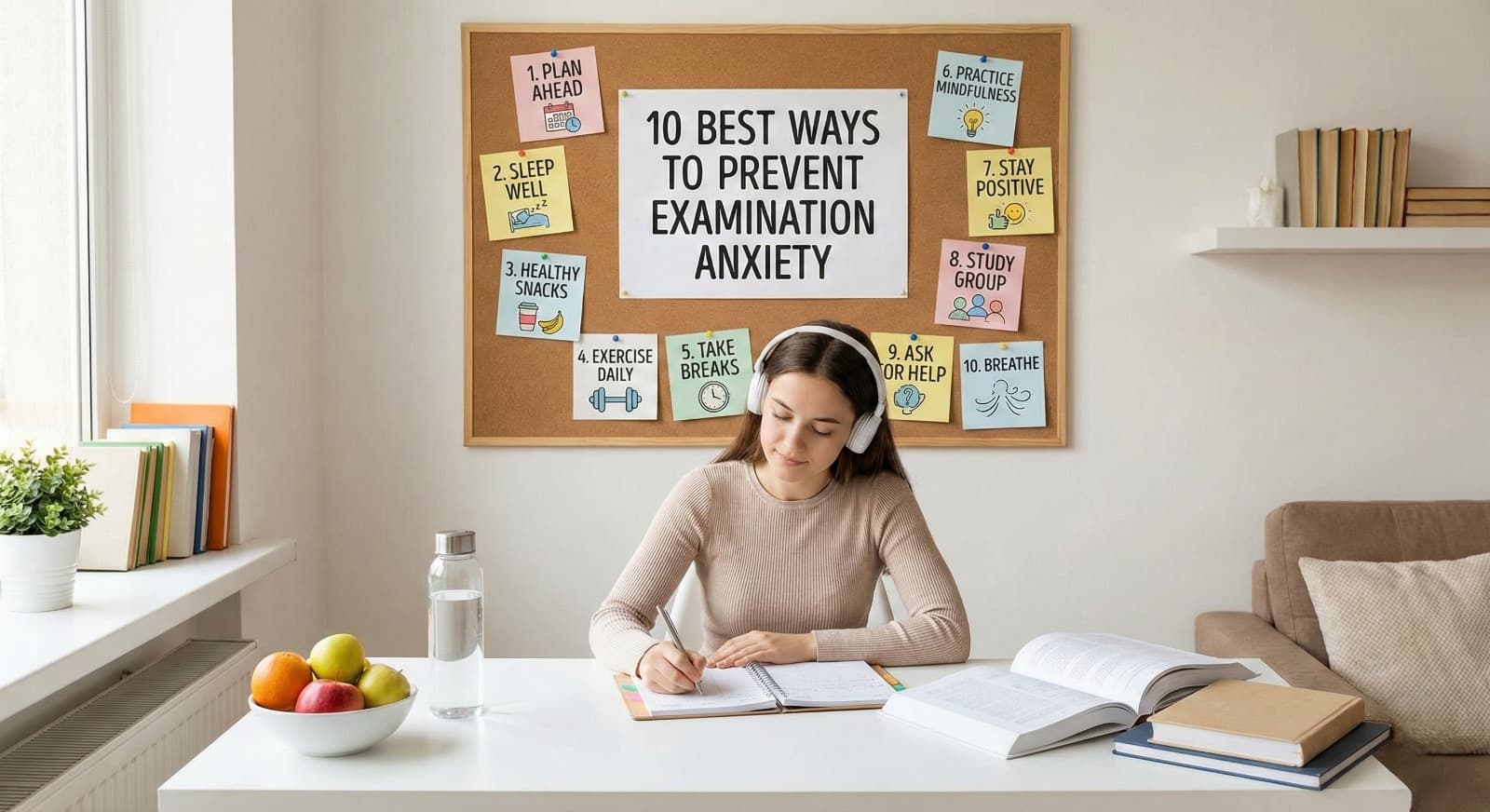
Examination anxiety — that intense feeling of worry, nervousness, or fear just before or during an exam — is something most students experience. But what really triggers this stress? Commonly, it stems from fear of failure, lack of confidence in preparation, comparison with others, and high expectations from self or others. When students feel unprepared, worry about disappointing parents or teachers, or fixate on exams’ impact on future success, it activates the body’s “fight or flight” response, releasing stress hormones that make the mind race and the heart pound even before the test begins. In many cases, unrealistic expectations and past negative exam experiences can condition the mind to associate exams with fear rather than opportunity, making anxiety feel even more intense. This anxiety isn’t just “feeling nervous.” It can have real mental and physical effects. Mentally, students might find it hard to concentrate, remember important concepts, or think clearly — even if they studied well. Physically, symptoms like rapid heartbeat, repeated sweating, upset stomach, and poor sleep can occur, directly impacting performance. Lack of sleep before exams, for example, has been shown to distort students’ perception of their performance and increase anxiety symptoms like nausea and trembling. Over time, chronic anxiety can also affect overall well-being, leading to exhaustion, loss of appetite, or even avoidance of learning activities. But the good news is that exam anxiety can be managed and greatly reduced with mindful habits, balanced preparation, and emotional support. So how can students prevent examination anxiety — not just cope with it? Here are 10 proven ways to stay calm and confident:
1. Start Early & Plan Smart Waiting until the last minute to review everything invites anxiety. Create a study schedule that breaks down the syllabus into manageable sections and spreads learning over weeks, not hours. This organized approach reduces the chaos that fuels stress.
2. Practice Often Gain confidence by doing regular revision and taking mock tests or practice exams under realistic conditions. Familiarity with exam formats and question styles makes actual exams feel less intimidating.
3. Develop Relaxation Habits Incorporate daily deep breathing, mindfulness, or meditation into your routine. These techniques help calm an overactive mind and lower physical stress responses like rapid breathing and muscle tension.
4. Prioritise Sleep and Nutrition Adequate sleep is essential for memory retention and emotional regulation. Avoid late-night cramming — restful sleep before an exam helps keep anxiety levels in check and sharpen focus. Eat balanced meals and stay hydrated to fuel both body and mind.
5. Keep a Healthy Lifestyle Regular physical activity — even light exercise like walking or stretching — releases endorphins, our body’s natural stress-relievers. A healthy routine boosts concentration and keeps your brain agile.
6. Avoid Excessive Caffeine Caffeine or energy drinks might seem like quick boosts during study sessions, but they can worsen anxiety symptoms like tremors and fast heartbeat, and disrupt sleep.
7. Practice Positive Thinking Replace negative thoughts like “I’ll fail” with affirmations like “I’ve prepared well and can do my best.” This subtle shift boosts confidence and reduces self-induced fear.
8. Take Breaks Learning non-stop can overwhelm the brain. Short breaks help refresh your mind, prevent burnout, and improve retention.
9. Arrive Early & Be Comfortable On exam day, reach the venue early. Rushing last minute increases stress. Being prepared and calm gives you valuable time to settle into a composed mindset.
10. Talk About Your Feelings Sometimes just talking about your fear with someone you trust — a friend, teacher, or family member — provides relief and perspective. Emotional support can make challenges feel manageable instead of overwhelming. Role of Parents & How They Can Help Parents play a powerful role in reducing exam anxiety — especially for younger students. Instead of adding pressure with comparisons or unrealistic expectations, parents should reassure their children that effort matters more than perfection. Encouragement, patience, and open communication help students express their fears without feeling judged. Simple acts like helping children set realistic study goals, providing nutritious meals, ensuring they get enough sleep, and offering breaks for relaxation can make a huge difference. Creating a calm, supportive home environment reduces stress and motivates students to put in their best effort without fear of judgement. In summary, exam anxiety is normal, but it doesn’t have to control your performance. With structured preparation, healthy habits, emotional support, and mindful practices, you can manage stress, sharpen your focus, and face exams with confidence. Remember — exams are a part of learning, not the definition of your worth. Stay prepared, stay calm, and trust in your ability to grow and excel...